Response to Endneo
About Complexity and Depth
First of all, you don't need to force a dichotomy complexity vs depth simply because people use indiscriminately both words.
It's a good exercise, as attempt to define them in a more accurate and efficient way, but asking yourself what's the difference doesn't mean that there is actually any necessarily by default, and you need to ask yourself if there are already words to describe the difference you are trying to force in the context of video games. Signifiers with a big overlapping exist in language because also such signifieds/concepts can co-exist (and are overlapped too).

One can still suggest a more consistent or logical normalization, but this is not the case. Not when complexity gets twisted in such a way, and oversimplified, simply to make more (meaningful) room for depth.
People understand that an uppercut is more complex than a jab, a long pass is more complex than a ground short pass, (5x5)-5 is more complex than 5+5+5.
A move-set with 4 ground moves, 2 launchers and 4 aerial moves is more complex than a game with 15 ground moves without any special properties to functionally distinguishes them, aside from slightly different animations. Because the type of elements and possible connections between elements count as well.
Nobody (charlatanry aside) would say the second game is more complex, because complexity is related to the amount of elements/raw options, only.
An interactive experimental design of:
Independent Variable x Independent Variable -> Dependent Variable,
like the interaction between genetics and environment regarding some cognitive abilities, is more complex than a model:
Independent Variable + Independent Variable -> Dependent Variable,
like the time spent dressing plus the time spent driving regarding the total amount of time you would need to arrive to a certain place, like your workplace or a date.
In the first case genetics and environment affect the third variable, but at the same time environment affects genetics, because depending on the presence of certain stimuli, some genes will get expressed in the phenotype or not.
In the second case, assuming you drive always as fast as possible (but safe), the driving time won't be affected by how much time you needed to get dressed.
We already discussed about this and you agreed when I told you that the example with the Tom and Jerry machine doesn't take into account the objective of the machine, which wasn't merely to kill/catch Jerry, but also to entertain the viewer. It still implies a complex creative process.
Even inside the story itself, the overcomplicated machine is, in any case, not efficient, but it's still complex in terms of both: amount of elements and their interaction. It would simply have a wrong objective/it would be developed wrongly for such objective.
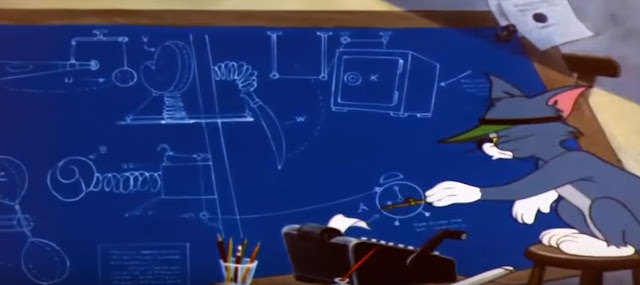
This machine is actually analogous to DMC's philosophy since DMC3. We don't try to merely kill Jerry/scarecrows, it's about how we do it (and it's definitely complex).
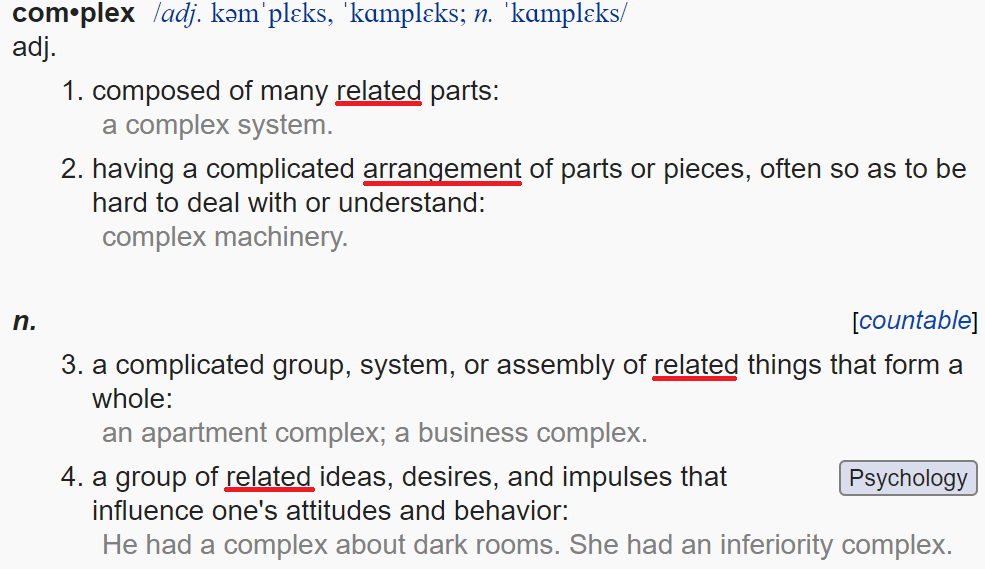
I am not against suggestions of different definitions of depth, but complexity has already a very essential meaning related to not only the amount of elements of a system, but also how they interact/how they are connected.
A system can have a certain complexity with superfluous elements. How should we express it in such case? Well, I just did it: you can use words such as precisely superfluous or useless elements for certain objectives.
As for depth, we can say that a game or a movie or a book are complex and deep. But you wouldn't say a car is complex and deep... Right? It's only complex.
This should suggest a more consistent way to define depth in our context. It's a consequence of the complexity of a system where we tend to learn, interpret, apply certain learned skills. And one can analyze, learn, interpret them more or less deeply.
Depth would be the potential that comes from the complexity of the game, movie, song, etc.; and you don't even have to use it necessarily to express such potential. Since it's already expressed by its complexity.
I personally use the concept of depth to say I played deeply X game (or not), for example. To express how much I have dug into the potential of the game. Sometimes we have to play deeply first to know the complexity of a game.
Of course there are additional meanings of deep, like the one thrown when something is perceived as nonsuperficial/mundane or part of the routine. Like a poem, which doesn't necessarily imply a lot of complexity (depends...).
But all this reaffirms why it's preferable to use the concept of complexity. Since it's more stable.
(I am not against using depth, since I know what most people mean with it... I am against the suggested redefinition of complexity to make depth fit better in this dichotomy).
First of all, you don't need to force a dichotomy complexity vs depth simply because people use indiscriminately both words.
It's a good exercise, as attempt to define them in a more accurate and efficient way, but asking yourself what's the difference doesn't mean that there is actually any necessarily by default, and you need to ask yourself if there are already words to describe the difference you are trying to force in the context of video games. Signifiers with a big overlapping exist in language because also such signifieds/concepts can co-exist (and are overlapped too).
One can still suggest a more consistent or logical normalization, but this is not the case. Not when complexity gets twisted in such a way, and oversimplified, simply to make more (meaningful) room for depth.
People understand that an uppercut is more complex than a jab, a long pass is more complex than a ground short pass, (5x5)-5 is more complex than 5+5+5.
A move-set with 4 ground moves, 2 launchers and 4 aerial moves is more complex than a game with 15 ground moves without any special properties to functionally distinguishes them, aside from slightly different animations. Because the type of elements and possible connections between elements count as well.
Nobody (charlatanry aside) would say the second game is more complex, because complexity is related to the amount of elements/raw options, only.
An interactive experimental design of:
Independent Variable x Independent Variable -> Dependent Variable,
like the interaction between genetics and environment regarding some cognitive abilities, is more complex than a model:
Independent Variable + Independent Variable -> Dependent Variable,
like the time spent dressing plus the time spent driving regarding the total amount of time you would need to arrive to a certain place, like your workplace or a date.
In the first case genetics and environment affect the third variable, but at the same time environment affects genetics, because depending on the presence of certain stimuli, some genes will get expressed in the phenotype or not.
In the second case, assuming you drive always as fast as possible (but safe), the driving time won't be affected by how much time you needed to get dressed.
We already discussed about this and you agreed when I told you that the example with the Tom and Jerry machine doesn't take into account the objective of the machine, which wasn't merely to kill/catch Jerry, but also to entertain the viewer. It still implies a complex creative process.
Even inside the story itself, the overcomplicated machine is, in any case, not efficient, but it's still complex in terms of both: amount of elements and their interaction. It would simply have a wrong objective/it would be developed wrongly for such objective.

This machine is actually analogous to DMC's philosophy since DMC3. We don't try to merely kill Jerry/scarecrows, it's about how we do it (and it's definitely complex).
I am not against suggestions of different definitions of depth, but complexity has already a very essential meaning related to not only the amount of elements of a system, but also how they interact/how they are connected.
A system can have a certain complexity with superfluous elements. How should we express it in such case? Well, I just did it: you can use words such as precisely superfluous or useless elements for certain objectives.
As for depth, we can say that a game or a movie or a book are complex and deep. But you wouldn't say a car is complex and deep... Right? It's only complex.
This should suggest a more consistent way to define depth in our context. It's a consequence of the complexity of a system where we tend to learn, interpret, apply certain learned skills. And one can analyze, learn, interpret them more or less deeply.
Depth would be the potential that comes from the complexity of the game, movie, song, etc.; and you don't even have to use it necessarily to express such potential. Since it's already expressed by its complexity.
I personally use the concept of depth to say I played deeply X game (or not), for example. To express how much I have dug into the potential of the game. Sometimes we have to play deeply first to know the complexity of a game.
Of course there are additional meanings of deep, like the one thrown when something is perceived as nonsuperficial/mundane or part of the routine. Like a poem, which doesn't necessarily imply a lot of complexity (depends...).
But all this reaffirms why it's preferable to use the concept of complexity. Since it's more stable.
(I am not against using depth, since I know what most people mean with it... I am against the suggested redefinition of complexity to make depth fit better in this dichotomy).


Comentarios
Publicar un comentario